Reflecting on the 40th Anniversary of This Present Darkness, Part 1
Ministries > Family Talk with Dr. James Dobson
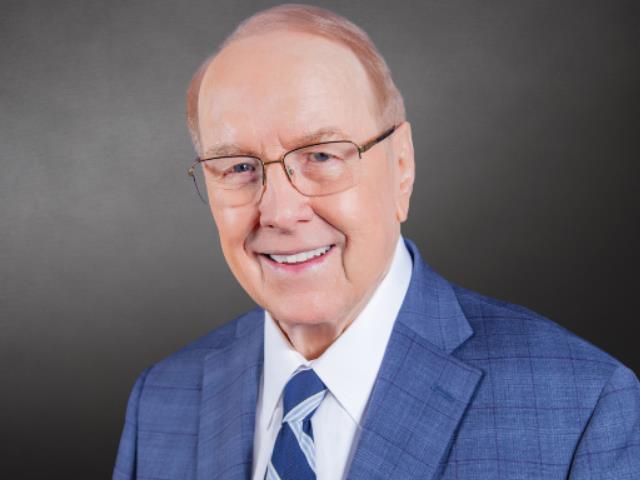
The Bible describes an unseen war between angels and demons, and ordinary Christian believers are caught in the middle. On today’s edition of Family Talk, Roger Marsh welcomes Frank Peretti, best-selling author of the novel, This Present Darkness. Forty years after its release, he explains how the story opened millions of eyes to spiritual warfare, and why it still inspires readers to pray.
Dr. James Dobson: Welcome everyone to Family Talk. It's a ministry of the James Dobson Family Institute, supported by listeners just like you. I'm Dr. James Dobson, and I'm thrilled that you've joined us.
Roger Marsh: Well, welcome to a special edition of Dr. James Dobson's Family Talk. I'm Roger Marsh, and today we're going to take a look back, and we're going to take a look forward, and to see where we are with regard to Christian fiction, which is something that it's a genre that really didn't exist for a lot of people for many years until one particular work came along. It was 40 years ago, and Frank Peretti asked Christian readers to imagine something that they couldn't see. And the question he asked was, what if the spiritual battle that scripture describes is literally unfolding all around us? Well, the result of his experiment, if you will, was the novel called This Present Darkness. It's a supernatural thriller that became a Christian publishing phenomenon and introduced generations of readers to the fictional portrayal of spiritual warfare that many of us unfortunately know all too well. It's hard to believe, but it's been 40 years since This Present Darkness was first released, and now David C. Cook Publishers is preparing to release This Present Darkness, the 40th anniversary collector's edition, and Frank Peretti is looking back at the story, what the four decades have taught him about prayer and spiritual warfare, and the line between biblical truth and fictional storytelling, and he joins us here on Dr. James Dobson's Family Talk for a conversation about this. Frank Peretti, welcome back to Dr. James Dobson's Family Talk. It's good to see you and good to be with you today.
Dr. James Dobson: This is a big deal. I mean, James Dobson and I, we had such a wonderful relationship, and now hearing him on your show again, it's, wow, this is huge, Jim.
Roger Marsh: Well, it's an honor, and I know if Dr. Dobson still were with us, he'd be pushing me out of the way and saying, Frank, how are you? I mean, I love your, the gift that you have of storytelling and the fact that you have been so willing to let God work through you. I mean, a lot of times we were talking before we started our broadcast today about the number of people who will take something and try to make something of it. And you use the expression, I find that what, like, I get out of the way and let God do what he's going to do. He does amazing, remarkable things. When you had the idea for this Present Darkness at first, I would imagine that most every Christian publisher went, "Huh?" I mean, they just, they weren't. It wasn't like, "Oh, good, we've been looking for this book." What was it like first to, where did the story come from? I know you're a great storyteller, you worked in youth ministry for a number of years. Where did This Present Darkness come from for you, Frank Brady?
Dr. James Dobson: Well, I wanted to do a book, you know, epic adventure, big stuff, battles and action, and I thought, well, man, what better place to go for that than angels and battling demons and so that was the initial spark and then it turned out probably by God's timing we already had this was back in the 80s mid 80s and that's when the new age Eastern mysticism and occultism were already starting to take a hold in the mainstream and so that's I kind of went towards that and developed that into it, and I ended up with this really, you know, gripping story of spiritual warfare, angels and demons battling it out with regular people like you and me caught in the middle. Made a great story.
Roger Marsh: Yeah, it certainly did, and I, it was very entertaining reading. Now, I was part of the group of people, and you know these people well, Frank Peretti. The book was published in 1986. I think I first read it in late 1987. It had been around for a while, and it was kind of a slow burn, you know, to get people into it. Talk about what that was like. I mean, I'm sure it was thrilling to have David C. Cook publish this thing and say, oh boy, now it's in Christian bookstores and people can see it, but it really didn't catch fire right away, did it?
Dr. James Dobson: No, I was working at the K2 ski factory. Molding skis. I'd written the book, and Crossway decided to publish it, and it sat on the shelves, and I sold maybe 40, 50 copies a month.
Roger Marsh: Mm, wow.
Dr. James Dobson: And I was thinking, you know, I'm never gonna get out of this factory. About a year later, people began to find out about it, and I remember Amy Grant read it, began to talk about it at her concerts. Michael W. Smith, pastors began to read it and talk to their congregations about it. It was right, I think, right about the beginning of '87. I would call the publisher every month from the locker room at the factory to see how the book was doing and I think the first month he said, well, you know, we did pretty good. We sold about 4,000 copies. I said, wow, 4,000 copies. I called him the next month, well, you know, we're really doing well. We sold about 20,000 copies and that was the hand of God, I figured, you know, there was no big, no big advertising or promotion, just people started talking about it, and okay, that's the hand of God, you know.
Roger Marsh: Mm, yeah.
Dr. James Dobson: He made it happen.
Roger Marsh: I think one of the things that made it so compelling for a lot of people, first of all, Frank, you're just an amazing storyteller, and every time I've had the privilege of having conversation with you over the years on different programs, it's always just a joy to watch your mind work in terms of how you're going to present something. But I think one of the things that also gave it such a heady feel is the fact that you weren't coming at this saying, I'm the Reverend Dr. Frank Peretti. I've been studying angels and demons for 35 years in some seminary. You really came at it from a very practical, this is the way I interpret scripture. This is the way I explain it to people, and people could all of a sudden, for lack of a better phrase, they could get it. They could really understand it a lot more than just some exegesis on some kind of fantastical apocryphal book that didn't make any sense to anybody. Was that kind of your int- I mean, you want to tell a great story, but there is a teaching component to that too. Talk about that, if you would.
Dr. James Dobson: Well, that was a really good observation. I was thinking about that, you know, I think he's right. Yeah, I didn't think about any of that. I was excited about the story. What's interesting, there had been a lot of theologians, and they really tried to analyze and then critique it, and of course I got into trouble because they didn't see it the way I did, but that was never what it was about. It was just, let's go there. Let's go there and imagine what it's like. let's give it character, let's give it faces, let's give it voices, and just imagine what the conflict must be like. I mean, when the angel that appeared to Daniel tells Daniel, I had to fight off the Prince of Persia for 21 days to get to you. What was that like? Just kind of imagine what... And yeah, you go from there and okay, I'm a storyteller. I love to envision really exciting things, and that's what I produced, and it worked. You're right about that one point. Millions of people out there are never going to read a big theological treatise.
Roger Marsh: True.
Dr. James Dobson: That, the real studious types, the theologians read those books, but you're just, you're every man, you're every woman out there, and your kids, they want a story, and that's what we gave them. And, boy, talk about fun. It's been really fun.
Roger Marsh: One of the plot points that I always appreciated, Frank, about this story is the fact that you've got a pastor who's coming to a struggling congregation in a college town. And when we see what's happening in the world of academia and the different identities that people want to identify with, and the fact that there's such a- college campuses have been under spiritual attack for decades, we're just now starting to realize it. I don't know if that was a convenient plot point or if you really were intentional in terms of saying, well, if we're going to tell a story about spiritual warfare, it has to happen in a college town. Was that premeditated on your part or just kind of a cool way to tell the story?
Dr. James Dobson: I think it was a cool way to tell the story, but yeah, I think it's fair to say that, well, I think what happened was I just got off of campus. I was going to UCLA. And So that made a real, real natural, let's set it in a college town. Let's have that college influence in there, because I just got out of there, so, But that's timely too, isn't it? Because Now it's the academic world that is such an incredible battlefront, which makes sense. If I were the devil, that's where I'd go.
Roger Marsh: Back in the day when the book first came out, you mentioned it was kind of a slow burn, 40, 50 copies a month became 4,000, became 25,000, became over 2 million, as I recall, for the initial run of This Present Darkness, and then the sequel Piercing the Darkness, and the different books that followed. But when you think about where you were then, I would imagine, and we still get people who write to us, so I'm not dating ourselves too much, that you got a lot of letters from people talking about how this book was impacting their life. Talk about the kind of letters and feedback you were getting.
Dr. James Dobson: That's, I've often compared that to bowling when there's a curtain across the alley. You roll the ball, and you wait and you listen to see if you hit anything. That's kind of what it's like. You write a book and you send it out there, and you don't know how it's doing until people actually start to write to you, and then you hear the pins drop, you know. Folks were saying it just blessed them, opened their eyes to the power of prayer. a lot of people said it really made them aware of spiritual warfare. In the battle that we had, a real spiritual reality, when their various church traditions never really went there, never talked about it. So that widened their perspective, and it's encouraged a lot of people, and some folks actually came to the Lord reading that book, so.
Roger Marsh: Was that a desire of yours? I mean, beyond telling a good story, was the hope that it would have an evangelistic bent to it as well?
Dr. James Dobson: Oh, absolutely, yeah. Everything I, everything I've written, trying to get the message out there, you know. I'd be wasting my time if I just told a story. There, there's, there's a message every time I write.
Roger Marsh: It's very clearly articulated, and it's resonated with millions of people, and Frank Peretti is here with us today here on Family Talk to talk about the 40th anniversary collector's edition of This Present Darkness, which is now available, and we have a link for the book up at DrJamesDobson.org. There are a lot of people who look at this book, and they were, the critics will all come out, of course, because you weren't Frank Peretti PhD from Ivy League school or big Christian college at this point. You were Frank Ferretti working in a ski factory and likes to tell stories and is a great writer. And the fact that you hit the nail on the head in so many different areas of spiritual warfare, I would imagine that there are a lot of people who, who were trying lovingly to come alongside you, offering a little bit of constructive criticism, challenging theology and things of that nature. What were some of the more interesting criticisms that you got from those who were saying, Frank, I know this is a great story, but let me tell you what you're really missing here in this story.
Dr. James Dobson: Yeah, one of the interesting questions, and, you know, I haven't settled it in my mind, and I'm not that concerned about it, but the sovereignty of God came into this, because in the book, in the narrative, we, the saints of God, and our prayers have an effect on things. And when we pray, it helps the angels win the battle. Now that's mostly a good fictional device because it raises the stakes and it gets our characters involved, and they, in the process of the story, are coming to realize, hey, this is our battle too. And God has put us in this town to participate in this battle through prayer and through speaking the word and so forth. So in terms of a lofty theological concept, some of the critics said, well, you're kind of saying that God is dependent on us to do what he wants to do.
Roger Marsh: Mm, mm-hmm.
Dr. James Dobson: And so you can bicker about that. A-at the root of it, we know that prayer is our privilege, and God wants us to pray.
Roger Marsh: Amen.
Dr. James Dobson: We know that our prayer can make a difference. Okay, now once the prayers go to heaven, so to speak, and God hears them, I don't know what happens after that.
Roger Marsh: Sure.
Dr. James Dobson: Theologically, I don't, but I know that we are to pray, and that was the essence of the story. I fictionalized it, I dramatized it, I made kind of a metaphor out of it. And I tell people this pretty regularly, do not read This Present Darkness if you're looking for theology. Read This Present Darkness for inspiration, encouragement, and just a really neat venture into what it could be like. I described it once as the Bible lays down the parameters and tells us overall what it's like, kind of like drawing in, sketching it in with the outlines and stuff. I, as the writer, just came in and put in the colors.
Roger Marsh: Mm. Mm-hmm.
Dr. James Dobson: You know, so that's basically what it is, and you know, and like, I- I've said that to theologians and such. I just, hey, I am not going to defend the book. It is what it is. Let it inspire you. Let the Holy Spirit speak to you. Enjoy it, and then you can talk theology afterward if you wish. Mm-hmm. You'll be fine. You'll be fine.
Roger Marsh: Yeah. Well, I think you have to be. Frank Peretti is our guest today here on Dr. James Dobson's Family Talk as we talk about the landmark work, This Present Darkness, which has a new 40th anniversary collector's edition out, and the link is up at our website, drjamesdobson.org. I remember hearing an interview, it might have even been a conversation that you and I had, but it was many years ago, so I wouldn't, I'm not hurt feelings at all if you don't remember telling me this, but I remember you talked about the process for you for writing and how it really was, at that point anyway, kind of a 9 to 5 job. I mean, this wasn't one of those- A lot of people would look at a book like this and say, "Well, Frank, what mountain did you go to? What desert region did you spend a month in, kind of wandering the hillside coming up with this?" And you were- you spoke very kind of Grisham-esque, pragmatically. I have an office, I sit down at 9 in the morning, and I write till 5 in the afternoon. Is that, was that your process then, and does it continue to today? Are you still doing that heavy workload?
Dr. James Dobson: Well, yes and no. Okay. When I did This Present Darkness, I was doing everything else. I was helping my dad pastor a church. I was working in carpentry. I was working on a factory, so that was This Present Darkness was grab any time I could
Roger Marsh: Sure.
Dr. James Dobson: to write it. Yeah, so, then This Present Darkness began to sell well enough that I was able to go full time into writing. and I did Piercing the Darkness. Now that was a regular job, that was 9 to 5, but it was at home, at my own desk, you
Roger Marsh: Nice,
Dr. James Dobson: know?
Roger Marsh: nice.
Dr. James Dobson: Oh, and Piercing the Darkness is the first book I wrote on a computer. That was
Roger Marsh: Really?
Dr. James Dobson: a big deal.
Roger Marsh: Yeah, I love it.
Dr. James Dobson: This- this Person of Darkness was all typewriter, on
Roger Marsh: Oh, wow.
Dr. James Dobson: paper
Roger Marsh: Wow.
Dr. James Dobson: with correction tape, you know, and cross
Roger Marsh: Oh, yeah.
Dr. James Dobson: outs.
Roger Marsh: Oh, yeah.
Dr. James Dobson: As a matter of fact, the, this 40th anniversary edition includes at the face, the facing page of every chapter, includes the original typewritten manuscript.
Roger Marsh: Oh wow.
Dr. James Dobson: Yeah, and it's got the scratch outs and the scribbles and And it's, I typed that on the back of UCLA form letters. They were throwing out a whole stack of form letters. I took those home. I was a college student starving, you know, so. Hey, free paper, it's still blank on one side.
Roger Marsh: Exactly. Well, it's nice to see that something besides Frank Peretti that was good came out of UCLA, and it was that form paper that he was able to use for this present darkness. Good for you for being resourceful. I love it.
Dr. James Dobson: Yeah, so that that's kind of a historical document they had me digitize. I still have all those pages in binders, you know. And they had me digitize that, and then they put it in the book as a historical artifact or something. It's a really loaded book. It's got a lot of cool stuff in it.
Roger Marsh: What is the biggest misconception that people have about This Present Darkness? I mean, I'm sure you've gotten all sorts of praise from people. Boy, this really invigorated my prayer life. Wow, I have a whole new appreciation for the tenacity of spiritual warfare, the dangers thereof. But what are some of the criticisms that people have gotten? Because while maybe they were criticisms, they just said, oh, I love the way you were trying to tell this part of the story, and you're looking at it like, that's not what I was trying to do at all. What do people miss about This Present Darkness?
Dr. James Dobson: I think, you know, it really isn't a problem now, but when the book first came out, it could be the Christian publishing market back then, because there was such a rarity of Christian fiction. It was, about that much space on the bookshelf in the bookstore.
Roger Marsh: Very small.
Dr. James Dobson: Yeah, I don't think, I met some people that weren't really used to reading fiction for what it is. It's, it's symbolic, it's metaphor, it's a legend, it's a form of mythos. Every culture has its legends, its myths that convey truth. I think a lot of readers, no, no, not that many, but some readers took the book way too seriously. They, they took it like, oh, this is a theological treatise, or we can really learn from this. I had somebody ask me, oh, is there a study guide to go with it? And I said, no, no, just read the Bible for that.
Roger Marsh: Best study guide you can find, yeah.
Dr. James Dobson: Yeah, yeah, you have to learn the difference between, what fiction is and what it's for. you know, even doing publicity back then, it was a little difficult to get, interviews and that kind of thing because the interviewers, they weren't used to doing fiction.
Roger Marsh: Sure.
Dr. James Dobson: They did non-fiction, they all that. And I even had a publicist tell me, well, I can't get you on the radio, I can't get you an interview because it's fiction, there's nothing to talk about.
Roger Marsh: Oh boy. Oh
Dr. James Dobson: So
Roger Marsh: man.
Dr. James Dobson: That's a- that's a cultural thing. Um, but- but fiction, of course, has really come into its own in the Christian market. And, um, I a- actually heard people say, "I never read fiction, but I liked your book." It's- it's kind of to say, "Oh, well, fiction is kind of persona non grata, you know, we don't really read that. That's really changed now. It's, it has come into its own. So that, that's kind of a interesting cultural observation right there.
Roger Marsh: You know, it's interesting, Frank, as you talk about where you were in 1984, 85, 86, when this was starting to happen, and then, of course, Tilly's, you know, the radio drama becomes a novel, and then Piercing the Darkness, it comes on, and then you get into the mid-90s or later in the 90s with, with Jerry Jenkins and Tim LaHaye, you know, taking their Left Behind series. And I remember talking to Jerry about it one time, and he mentioned that whole dilemma of, well, do people take it seriously because it's quote-unquote fiction, but it is based on, you know, biblical principles. And he said, I like to call it faction as opposed to fiction because I'm using biblical truth, but I'm- it's a fictionalized story, of course. But you're telling biblical truth, and I think that was, for me, the eye-opening moment in reading This Present Darkness was, hey, wait a minute, okay, I don't know that there is a town called Ashen, I don't know Pastor Hank or, you know, any of this stuff, but in terms of what's happening, this is plausible, and the spiritual warfare part is very, very real. So I think that for people who are looking at that thin line between biblical truth and fictional storytelling, you really showed us how to do it in terms of saying, okay, the story isn't quote unquote true, but the biblical truth is very real.
Dr. James Dobson: Well, yeah, and Left Behind was the same way, and it worked. millions read that series of books. So, okay, there. That's how Christian fiction works, at least with me and Jerry Jenkins.
Roger Marsh: Well, I, you could do a lot worse, you know, but quite frankly, I mean, you guys really, but you, like you said, you stepped into something that wasn't there with This Present Darkness. It was more than just a novel, and here we are 40 years later. I mean, this is a conversation that is, it almost feels like if you read This Present Darkness right now, it's like Frank Peretti just wrote it for right now. I mean, with the current time that we're living in. Do you get that feeling too, as you look back on those years and say, boy, I could have written this in 1986 or 2026, and it would still be relevant?
Dr. James Dobson: That is part of the awe, the amazement. Yeah, the issues and the truths and the warfare are the same. They didn't change. It's the same in the 80s as it is now, and the issues are the same, and the hearts that read the book are the same.
Roger Marsh: Well, Frank Peretti, we're so grateful for the work that you've done on This Present Darkness, to give it the length that it has, I mean, and letting God really steward this story along with you. the 40th anniversary collector's edition of This Present Darkness is now out, and it's up at drjamesdobson.org. Frank, we're just scratching the surface here. Can we ask you back for another conversation and keep on talking about this?
Announcer: Oh yeah, let's do it. Let's do it. Frank Peretti's classic This Present Darkness has captivated readers for 40 years, but as he reminded us today here on Dr. James Dobson's Family Talk, the real story isn't just about angels and demons, it's about recognizing our need for God and remembering the importance of prayer. By the way, if you'd like to hear today's conversation again, you'll find the audio at drjamesdobson.org, and the video is on our YouTube channel. You know, spiritual foundation begins at home, and that's why the Dr. James Dobson Family Institute offers a free 5-day email series designed to help parents talk about faith, pray with your kids, and point them toward the Lord. The title is Sharing Jesus with Your Children, and if you'd like to receive this free five-day email series, simply go to DrJamesDobson.org and search for that title, Sharing Jesus with Your Children. Resources like this one, along with conversations like the one you just heard, are made possible by listeners just like you who believe that families need biblical encouragement, and your generosity helps us bring trusted voices, practical guidance, and the hope of God's word to homes all across the country. Every donation helps us reach another family with truth and encouragement. Please consider making a financial contribution to support the Dr. James Dobson Family Institute today. You can give securely online at drjamesdobson.org. If it's easier, just type in those initials JDFI.org. That'll get you to the same place. Or you can write to us. Our ministry mailing address is the Dr. James Dobson Family Institute, PO Box 39000, Colorado Springs, Colorado, the zip code 80949. Well, I'm Roger Marsh, and on behalf of all of us here at Family Talk and the Dr. James Dobson Family Institute, thanks so much for joining us today. Be sure to tune in again next time right here as I'll continue my conversation with the legendary novelist Frank Peretti, reflecting on the 40th anniversary of this present darkness. That's coming up right here on the next edition of Dr. James Dobson's Family Talk, the voice you trust for the family you love. This has been a presentation of the Dr. James Dobson Family Institute.
Related Episodes
Redeeming Justice, Part 2
Friday, November 20
Redeeming Justice, Part 1
Thursday, November 19
Kingdom Men Rising
Wednesday, November 18
Related Videos


About Family Talk
Family Talk is a Christian non-profit organization located in Colorado Springs, Colorado. Founded in 2010 by Dr. James Dobson, the ministry promotes and teaches biblical principles that support marriage, family, and child-development. Since its inception, Family Talk has served millions of families with broadcasts, monthly newsletters, feature articles, videos, blogs, books and other resources available on demand via its website, mobile apps, and social media platforms.
The Dr. James Dobson Family Institute (JDFI) is a Christian non-profit ministry located in Colorado Springs, Colorado. Founded initially as Family Talk in 2010 by Dr. James Dobson, the organization promotes and teaches biblical principles that support marriage, family, and child development. Since its inception, Family Talk has served families with broadcasts, monthly newsletters, feature articles, videos, blogs, books, and other resources available on demand via their website, mobile apps, and social media platforms. In 2017, the ministry rebranded under JDFI to expand its four core ministry divisions consisting of the Family Talk radio broadcast, the Dobson Policy and Education Centers, and the Dobson Digital Library.
Dr. Dobson's flagship broadcast called, “Dr. James Dobson’s Family Talk," is aired on more than 1,500 terrestrial radio outlets and numerous digital channels that reach millions each month.
About Dr. James Dobson
Dr. James Dobson is the Founder Chairman of the James Dobson Family Institute, a nonprofit organization that produces his radio program, “Dr. James Dobson's Family Talk.” He has an earned Ph.D. from the University of Southern California and holds 18 honorary doctoral degrees. He is the author of more than 70 books dedicated to the preservation of the family including, The New Dare to Discipline, Love for a Lifetime, Life on the Edge, Love Must Be Tough, The New Strong-Willed Child, When God Doesn't Make Sense, Bringing Up Boys, Bringing Up Girls, and, most recently, Your Legacy: The Greatest Gift. Dr. Dobson served as an associate clinical professor of pediatrics at the University of Southern California School of Medicine for 14 years and on the attending staff of Children’s Hospital of Los Angeles for 17 years in the divisions of Child Development and Medical Genetics. He has advised five U.S. presidents and served on eight national commissions. Dr. Dobson has been married to Shirley for 64 years, and they have two grown children, Danae and Ryan, and two grandchildren.
Contact Family Talk with Dr. James Dobson
540 Elkton Drive
Suite 201
Colorado Springs, CO 80907
Phone Number
877.732.6825