4 Reasons Families Will Love ‘A Great Awakening’
Movies

Audio By Carbonatix
By Michael Foust, Movies
It’s From a Trusted Name: Sight & Sound
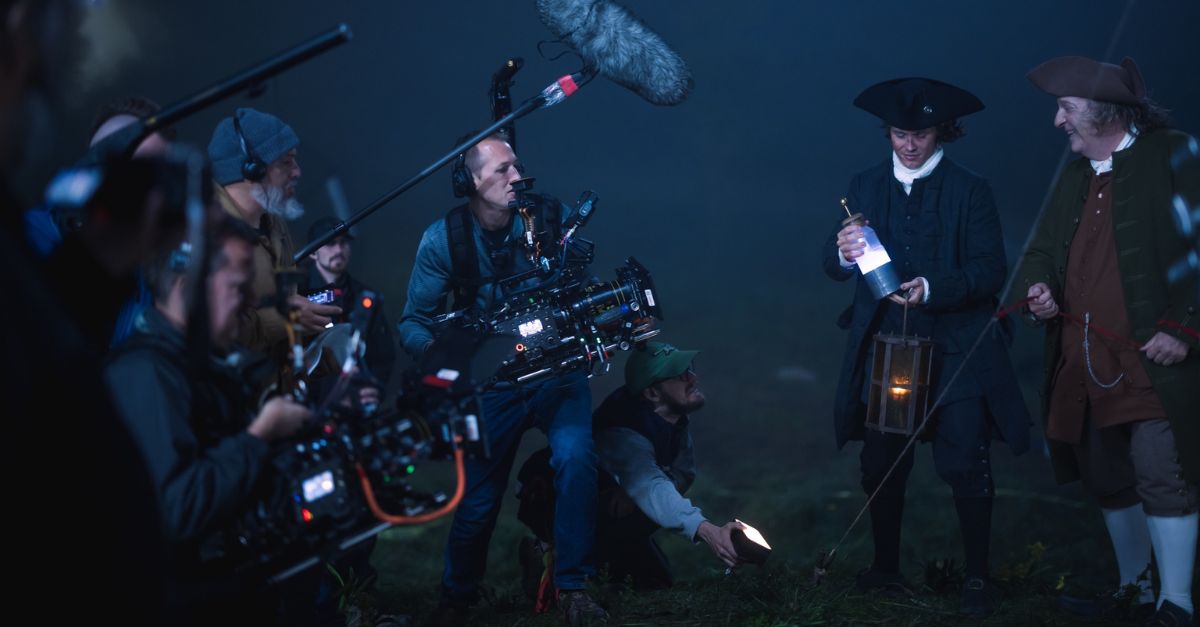
A Great Awakening was produced by Sight & Sound Films, which is part of Sight & Sound Theatres, and previously released another historical drama, I Heard the Bells.
Sight & Sound is best known as a leading Christian theater company that stages large-scale, Broadway-style productions bringing biblical stories to life. (It has two locations: Lancaster, Pa., and Branson, Mo.)
It shows feature massive sets, live animals, and immersive staging that surrounds the audience – drawing more than 1 million people each year.
Sight & Sound may be synonymous with its Bible-based theater productions, but thanks to its recent movies, it’s becoming a rising name in filmmaking, too. A Great Awakening is its best movie yet.
Photo Credit: Sight and Sound
It’s a Compelling Story of Friendship Between a Believer and a Skeptic
Franklin’s father is a man with 10 children who makes a living as a candlemaker – bringing “light to darkened households and warmth to cold souls” –, but he hopes his youngest boy will become a preacher. Such a notion doesn’t appeal to Franklin (John Paul Sneed), who is already showing signs of spiritual skepticism and instead dreams of becoming a writer, perhaps even working in a print shop. His father gives him his blessing, believing he will still make an impact on the world.
“God’s hand is upon you,” the dad says.
A Great Awakening parallels the stories of Franklin and Whitefield, following their respective boyhoods and teen years until they meet, for the first time, in 1739 – roughly halfway through the movie.
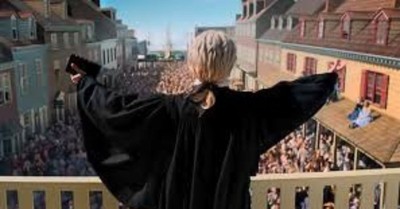
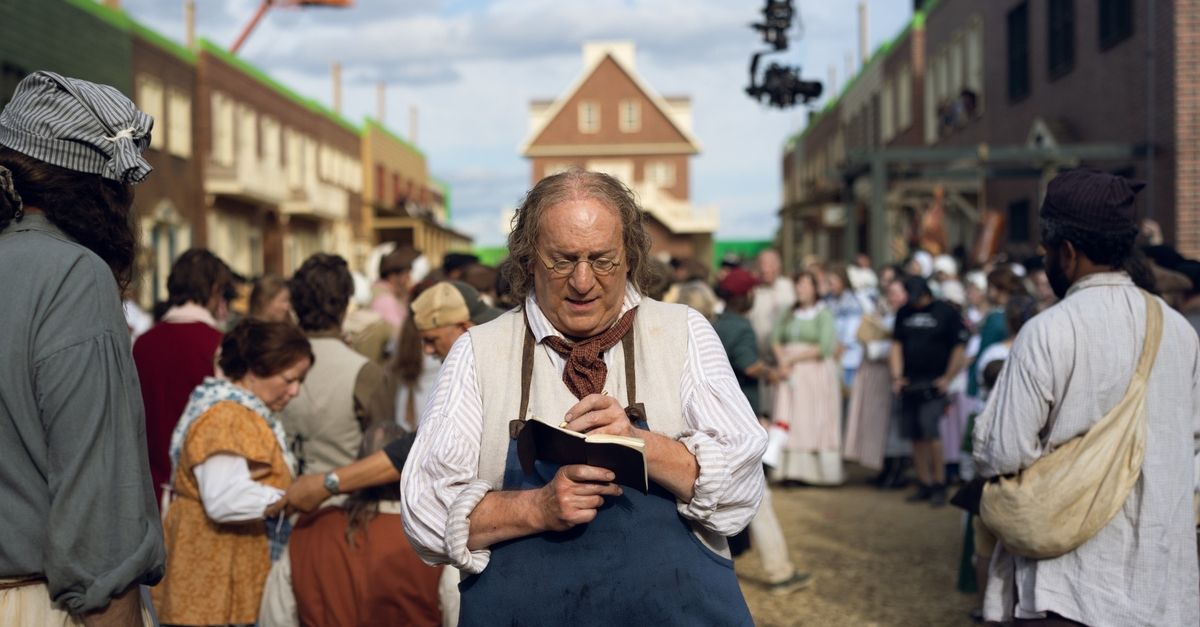
Franklin, an inquisitive man who rarely believes anything on face value, is at first skeptical of the stories from across the ocean about the crowds Whitefield has drawn – until he sees it for himself, using a simple math formula to estimate the size of the gathering in downtown Philadelphia and concluding that Whitefield has attracted some 30,000 people – larger than the city’s population, meaning the minister has drawn crowds from well beyond the city limits.
The film weaves together flashbacks between an elderly Franklin at the 1787 Constitutional Convention and his earlier years with Whitefield, highlighting not only the evangelist’s impact on the statesman but also his influence on America’s founding.
The film’s final moments tie together two lingering tensions – first, Franklin’s doubt about Christ, and second, the uncertainty surrounding the convention, which was on the verge of collapse. Together, the two scenes create a gripping conclusion that underscores both the personal and national stakes.
“Ben, it's not enough to believe in God – even the devil believes in God,” Whitefield pleads. “Everything, everything, comes down to what you make of Jesus Christ.”
The filmmakers wisely avoid portraying Whitefield as a saint, noting – through Franklin’s words – that the evangelist used slave labor to run his orphanage.
“Do not base your faith upon my flawed life,” Whitefield retorts.
Photo Credit: Sight and Sound
It’s an Entertaining Look at Church and American History
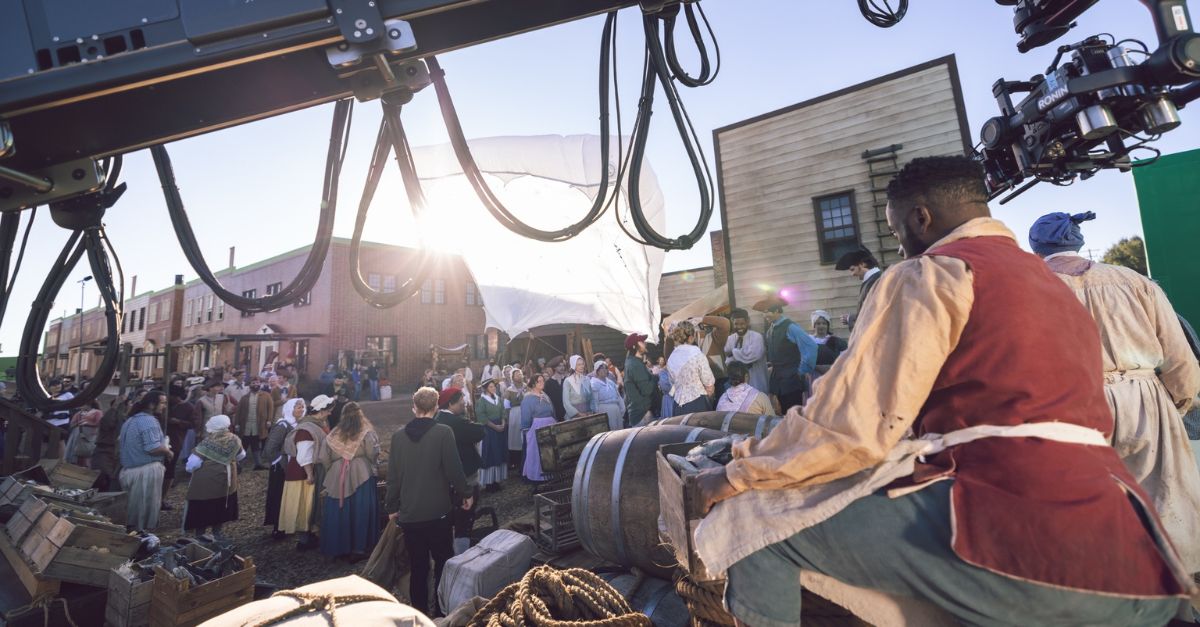
History is not the dull memorization of dates and places – it’s a fascinating journey through time, following compelling characters who made bold choices and left a lasting mark. Done well, studying history is like reading a novel … that’s non-fiction.
A Great Awakening is history done well. Most moviegoers will know a little about Benjamin Franklin, next to nothing about George Whitefield – and even less about their unlikely friendship.
God used Whitefield to spark the First Great Awakening, a sweeping revival that took place in the American colonies in the 1730s and 1740s, marked by passionate preaching, mass conversions, and a renewed emphasis on personal faith – a movement that left a lasting imprint on the nation’s identity.
And God used a skeptic, Franklin, to spread His Word. The two men shared some common ground, differed on much, yet remained friends because of their mutual respect. That alone is a solid lesson for our divided times.
Photo Credit: Sight and Sound
It’s a Timely Story for America’s 250th Birthday.
Would the American Revolution even have taken place had George Whitefield not traveled to the United States? That’s a difficult question – but this much is certain: Whitefield laid the groundwork for what followed.
Author Kenneth E. Lawson asserted in a 2022 article in the Journal of the American Revolution that “Whitefield’s influence upon colonists in the Revolutionary War was profound.”
“His preaching on the freedom to approach God without political or ecclesiastical permissions helped create a mindset of civil freedom away from Great Britain,” Lawson wrote. “It was during the revivals of the Great Awakening that American colonists began to view themselves as capable of interpreting the way and will of God for themselves.”
The First Great Awakening created a “common, independent identity against the ceremonies, liturgies, and political interferences from England,” he added.
Colonists began questioning their English identity. Many of the colonists who accepted Christ under Whitefield’s preaching died on Revolutionary War battlefields.
“It was as if Whitefield and other clergy,” Lawson wrote, “weaved people from various religious denominations, and even some of the irreligious, into a spiritual body of independent, freedom-loving thinkers that would withstand a war with Great Britain.”
A Great Awakening is rated PG-13 for brief violence. It contains no coarse language or sexuality.
Entertainment rating: 4 out of 5 stars.
Family-friendly rating: 4.5 out of 5 stars.
Photo Credit: Sight and Sound


