Leviticus 6, 7
Ministries > Thru the Bible with Dr. J. Vernon McGee
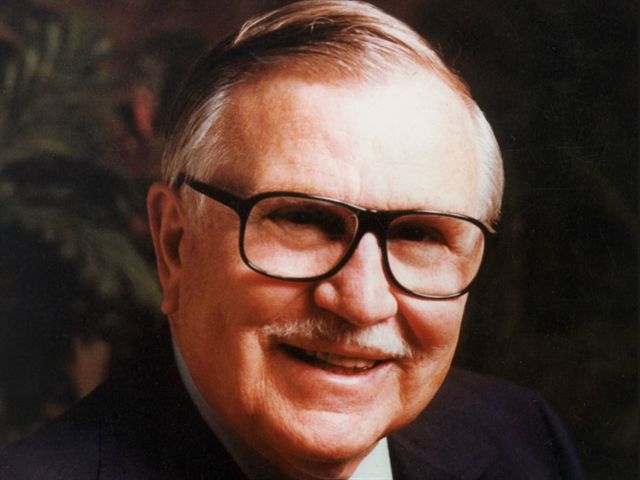
https://www.oneplace.com/ministries/thru-the-bible-with-j-vernon-mcgee/
Facebook Twitter Instagram YouTubeIt’s easy to get lost in doing the motions of the Christian life. In Leviticus 6 and 7, God makes it clear these sacrifices were not salvation. Instead, they were a picture of the Great High Priest, who sacrificed Himself for us. It was not the people of Israel’s works that saved them, but rather their faith in God’s promise to send a Savior.
References
Announcer: How firm a foundation, ye saints of the Lord, is laid for your faith in his excellent word.
Steve Schwetz: Welcome to Thru the Bible. I'm Steve Schwetz, and I've got a hunch that somewhere in your house, or maybe your parents' or your grandparents' house, there's a mug or maybe a bookmark, something with these words on it. The Lord is my shepherd. Am I right? Well, why do we love Psalm 23 so much? Well, I think it's because of the beautiful picture that God gives us of himself. A loving shepherd who protects, provides, and never leaves his sheep. Well, as our study of Leviticus continues, God paints another picture of himself. Dr. McGee says it isn't as obvious as Psalm 23, but it's just as wonderful. In Leviticus, we discover that Jesus is our high priest, ministering on our behalf in heaven even now. If you're new to our listening family, welcome. And let me mention a couple of things that will help you as we journey together through God's entire word. First, there are so many options for listening right in our app or over at TTB.org, as well as YouTube and Alexa, and of course, your favorite Christian radio station. And if there's one thing that you'll want to have handy while we study, it's Dr. McGee's notes and outlines. They're available for download anytime in our app or at TTB.org. Just look for our digital book, Briefing the Bible. Or you can request an abridged print copy by calling 1-800-65-BIBLE. Finally, one of my favorite parts of every program is opening the mailbag. Dr. McGee started the tradition years ago, and we're so grateful to be able to carry it on today. Here's a recent note. This is from Amber, a fellow Bible bus passenger. She says, I've been listening for about 6 years now and have grown so much in my walk, faith, and understanding of the word of God thanks to your program. I'm a former drug addict, currently 11 years clean, now working as a drug counselor at a women's residential treatment facility. Yesterday, I got to share your program with one of my ladies. When I have a client who first confesses faith in Christ, I get to talk about Jesus with them, and I was so blessed to share Dr. McGee with a woman who is just beginning her sobriety journey. I know Jesus is the only answer for addiction, so thank you for this platform that I can use to share with my ladies. God bless you all. Well, Amber, thanks for listening, and thanks for passing along what you're learning. Keep us posted on your ministry. You know, we'd love to hear your story too, and you can write to us at [email protected], also box 7100, Pasadena, California, 91109, or in Canada, box 25325, London, Ontario, N6C 6B1. And if you'd like to learn more about supporting this ministry, just visit ttb.org or call 1-800-65-Bible. Let's ask the Lord to guide our study now. Heavenly Father, would you open our eyes to see Jesus more clearly and to understand how he's ministering on our behalf even now? In his precious name we pray, amen. Is your Bible open?
Dr. J. Vernon McGee: Well, here's Dr. J. Vernon McGee with our study of Leviticus 6 on Thru the Bible. Now we have been looking at these five offerings in Leviticus, the burnt offering, meal offering, peace offering. Those are the sweet savor offerings. And now we have considered the non-sweet savor offerings, the sin offering that speaks of the nature of sin. We are born in sin, and then the trespass offering, which speaks of that which we do, the acts of sin. And now we want to consider chapter 6 and 7, which have to do with the law of the offerings. We've actually looked at that as we've gone along. I'll not go into a great deal of detail now, but there's some general remarks that we need to make about each one of them. We have, first of all, the law of the burnt offering, and we had considered last time the first 7 verses that had to do with the trespass offering, and so we'll more or less go by them. We'll be coming to the law of the trespass offering when we get to the 7th chapter. And then we have laws concerning the burnt offering, the meal offering, and the sin offering here in chapter 6, and then we'll take up the others when we get to chapter 7. Now, we have some very specific directions here for the priests. We need to note that some have labeled these chapters here special rules for the priests who minister at the altar of God. And you'll notice that these rules or law of the offerings is directed to the priests. That is important to note. It opens, you see, that is this particular section. He shall command. That's quite interesting, that he shall command Aaron and his sons. We need to also recognize that the priests were the ones who served at the altar, and they were involved in all of the offerings that were made on the burnt altar. We are told in Hebrews 8, 3 and 5, for every high priest is ordained to offer gifts and sacrifices. Wherefore it is of necessity that this man have somewhat also to offer. If he were on earth, he should not be a priest, seeing that there are priests that offer gifts according to the law, who serve unto the example and shadow of heavenly things, as Moses was admonished of God when he was about to make the tabernacle. For see, saith he, that thou make all things according to the pattern showed to thee in the mount. Now we can see from the above scripture that not only do the priests alone serve at the burnt altar, but all is a shadow of the reality in heaven where Christ, our great high priest, serves today. Therefore, these are great spiritual lessons for us. Now, there's another striking thing about the law of the offerings, that Christ is not only the sacrifice, but he's also the priest. He offered himself. There was no priest there to offer him. He offered himself. And this is what we're told. And again, let me give this extended quotation from Hebrews 10. Wherefore, when he cometh into the world, he saith, Sacrifice and offering thou wouldst not, but a body hast thou prepared me. In burnt offerings and sacrifices for sin, thou hast had no pleasure. Then said I, lo, I come in the volume of the book it's written of me to do thy will, O God. Above, when he said, sacrifice and offering and burnt offering and offering for sin, thou wouldst not, neither hadst pleasure therein, which are offered by the law. Then said he, lo, I come to do thy will, O God. He taketh away the first that he may establish the second, by the which will we are sanctified through the offering of the body of Jesus Christ once for all, and every high priest standing daily ministering and offering oftentimes the same sacrifices which can never take away sins. But this man, after he had offered one sacrifice for sins forever, he sat down on the right hand of God. Now, that is the thing we need to be made aware of today. A religion down here with marching and burning of candles and wearing robes and going through little rituals and preliminaries and all that sort of thing really has no value today at all. In fact, a lot of us in our churches, we go through a lot of things that are really not worthwhile at all, because those that worship God must worship him in spirit and truth. Now, God gave these things to set before us great spiritual truths so that we would see that. Now, you and I have a high priest that is in heaven today, and he's as busy as he can be. Now when he says he sat down, it means that his redemption was complete. It's just same as when it says God rested on the seventh day. He wasn't tired. Lord Jesus didn't sit down up there to do nothing. He's busier today than he's ever been. He died down here to save us. He lives up yonder to keep us safe, and you and I ought to keep in touch with him. This is reality. This is spiritual. The trouble today is we're out of touch with the living Christ, and he's no longer a reality to us. The greatest compliment I ever heard passed on a preacher was the one I succeeded in Nashville, Tennessee. I went into the market house there one day where all the butcher shops were, and there was a great big butcher in there, and he said to me, he said, I understand you were following Dr. Allen. I said, yes. He said, you know, the thing about that man, every time I meet him, I feel like he just left Jesus around the corner. I want to tell you, friends, that's doing business with him. He should be a reality to us today. Now, verses 8 and 9. And the Lord spoke unto Moses, saying, Command Aaron and his sons, notice that, saying, This is the law of the burnt offering. It's the burnt offering because of the burning upon the altar all night unto the morning, and the fire of the altar shall be burning in it. Now that fire was to burn continually, and it means continuously only while the tabernacle was set up and not on the wilderness march. It's obvious it wasn't burning then. Now the burnt offering was left on the altar all night for a definite purpose, and the fire was kept burning in order that it all might be consumed. It was called the burnt altar, you know, and this speaks of the continual consecration of Christ. I find that when we're told that we're to offer ourselves a living sacrifice unto God, that's the hardest kind to make because when you crawl upon the altar and the fire gets hot, I crawl off. I don't know about you. I find a lot of folk do that, but it was only the Lord Jesus. He could say, I do always the things that please him. I wish I could say that. I'm afraid you can't say it, but the Lord Jesus could. But that's a challenge to every believer today, because God delights in the continual obedience of his children. This is, I think, real food for God. What love and obedience. And listen to this, the Lord Jesus in his high priestly prayer said, and for their sakes I sanctify myself, that they also might be sanctified through the truth. And you remember Samuel rebuked old Saul by saying, Hath the Lord as great delight in burnt offerings and sacrifices as in obeying the voice of the Lord? Behold, to obey is better than sacrifice, and to hearken than the fat of rams. For rebellion is as the sin of witchcraft, and stubbornness is as iniquity and idolatry. Because thou hast rejected the word of the Lord, he hath also rejected thee from being king. And today we need to recognize that you and I need to have our own hearts and lives offered to him if we belong to him. If we've been saved today, God forbid that it be just a profession. Now listen to him again in John 4, here, verse 31. In the meanwhile, his disciples prayed him, saying, Master, eat. But he said unto them, I have meat to eat that you know not of. Oh, how he delight in your obedience and mine. And King Saul was rejected because of his obedience, and the woman at the well was accepted because of her obedience. Then said they unto him, What shall we do that we might work the works of God? Jesus answered, said unto them, This is the work of God, that you believe on him whom he hath sent. Now, the priest, we're told here, shall put on his linen garment, his linen breeches shall he put upon his flesh, take up the ashes which the fire hath consumed with the burnt offering on the altar, he shall put them beside the altar, and he shall put off his garments, put on other garments, carry forth the ashes without the camp unto a clean place. Now God gave instructions concerning even the garments the priest to wear. You see, he was not only to put on a long robe, which is common to all priests, but also the linen breeches. Why? The flesh must be covered totally. God today cannot receive or accept the works of the flesh. The works of the flesh are manifest, Paul said to the Galatians, and it's an ugly brood, by the way. And Paul added, I tell you before, as I have told you also in time past, they which do such things shall not inherit the kingdom of God. My friend, the works of the flesh he can do without, and only the fruit of the Spirit is acceptable to him. The fruit of the Spirit's love, joy, peace, long suffering. These are the things that the Spirit of God can produce in our lives. Now the garments the priest wore when he removed the ashes were taken off and a fresh suit put on. You see this continual reminder of the utter pollution of sin. While the ashes of the altar spoke primarily the judgment of sin, that fire had been burning, and even the ashes are contaminated, and they must be taken out like this and put in a clean place outside of the camp. What a picture today of how defiling sin is. Verse 12, and the fire upon the altar shall be burning in it. It shall not be put out, and the priest shall burn wood on it every morning and lay the burnt offering in order upon it. He shall burn thereon the fat of the peace offering. Now, again, another reminder that the fire is to burn continually. A fresh fire was made in the morning and a burnt offering made for the total camp. This was the morning sacrifice. Verse 13, the fire shall ever be burning upon the altar. It shall never go out. How important that is. This is something we need to note today. Then we have the law concerning the meal offering, verse 14, and this is the law of the meal offering. The sons of Aaron shall offer it before the Lord, before the altar, and he shall take of it his handful of the flour of the meal offering and the oil thereof and frankincense and so on. And you see again the instructions are directed to the priests. The offerer is a worshiper who stands before the altar rejoicing before God, and the priest performs for him. Now we are told, verses 16 and 17, and the remainder thereof shall Aaron and his sons eat with unleavened bread, and unleavened shall it be eaten. That's the rendering of the Septuagint version. That's important, unleavened bread. Leaven speaks of evil. And the holy place is, I think here, the outer court. It was holy because God was there. God said, do you remember, to Moses at the beginning, draw not nigh hither, put off your shoes. Place whereon thou standest is holy ground. Now you'll notice verse 18, all the males among the children of Aaron shall eat of it. It shall be a statute forever in your generations. See, all believers can participate in the enjoyment of the beauties and glories of the holy humanity of our Lord Jesus Christ. My friend, you and I need to rejoice in him more than we are today. The priests, by the way, were not only to eat, but also to offer a tithe of the meal offering. The priests in turn, who took a tenth, were to offer a tenth. All of the tithe must be offered. Priests must give as well as receive. Ministers today ought to set an example to their congregation, this matter of giving. I've attempted as pastor over the years to urge the staff sitting on the platform to give and that the offering plate be passed. We're a part also. We have then the law concerning the sin offering that concludes this chapter, and the instructions are repeated again here to the priests. Now, notice just this one thing. The sin offering speaks of the work of Christ on the cross. You see, this speaks of the person of Christ. Christ must be holy, harmless, and free from sin to be a satisfactory offering for sin. He must be able to save. You see, the virgin birth is essential to the plan of salvation. A believer cannot deny the virgin birth. The sin offering was holy because Christ was free from sin, though he was made sin for us. It was my sin on him that caused him to have to die, not his, or just because he was arrested by the Romans and tried. He could have stepped off this earth any moment. Why, he told Peter, put up your sword. I could have legions of angels here if it was necessary. Now, in the seventh chapter, we have the law of the trespass offering and peace offering, and the instructions to the priests here continued in these two offerings. You see, the emphasis is upon their serving. And this is a picture of what the Lord Jesus not only has done, but is doing for us today yonder at God's right hand. You see, today he's still girded with the towel of service to cleanse us. If we confess our sins, he's faithful and just to forgive us our sins. Now, concerning the trespass offering here, why we are told, likewise, this is the law of the trespass offering. It's most holy. And in the place where they kill the burnt offering, shall they kill the trespass offering, and he shall offer it, and so on. Now, the ritual of the trespass offering here follows the same pattern as the sin offering. Although it's for the acts of sin, the offerer is reminded that the sacrifice is holy. The worth and merit of Christ cannot be too much emphasized. When we see our sin nature and our sinful acts in all their enormity and frightfulness, then we shall see the wonder and the greatness and the holiness of Christ. My friend, you will never appreciate him as a savior until you see yourself as a low down dirty sinner. That's what you are, and that's what I'm calling you because God's word calls you that. Now the blood is mentioned but not emphasized as in the sin offering. We're told, however, there is one law for them. There's a danger, I think, today of fundamentalism making the blood commonplace. I know a man, I get so tired of him talking about the precious blood. Well, of course it's precious, and anything's precious, you don't talk about it all the time. I think sometimes we ought to keep our diamonds and our pearls in safekeeping, a safe place, and don't let the swine get to the pearls, and we need to be on our guard that we treat holy things as if they were commonplace. I could dwell on that, but I better not. Now we see in verse 8, the priest that offereth any man's burnt offering, even the priest shall have to himself the skin of the burnt offering which he hath offered. And I've looked at that before. You see, clothed in the righteousness of Christ. That's important. And all the meal offering, we're told, verses 9 and 10, that's baking in the oven, all that is dressed in the frying pan in the pan shall be the priests. And the particular type of meal offering went to the priests in its entirety, you see. Now we have the law concerning the peace offering here, and this is the law of the sacrifice of peace offerings which ye shall offer unto the Lord. Now the emphasis here is upon the fact that it must be a free will offering. The reason behind it's thanksgiving. This has a special meaning for believers. By him therefore let us offer the sacrifice of praise to God continually, that is the fruit of our lips giving thanks to his name. And friends, today it's very hard to come to church and worship unless you're prepared to offer the sacrifice of praise to God. A complaining, criticizing Christian is in no position to worship God. How important this is. Now we're told here that besides the cakes he shall offer for his offering leavened bread. Now notice that they were to be unleavened in verse 12, but here in verse 13, the bread was to be leavened. Now this is a very strange specific. Leaven is included. Why? Well, when leaven is a principle of evil, why should it be? The reason lies in the fact that in verse 12, Christ is in view, while here in verse 13, the offerer is in view as he enters into the peace Christ has made and provided. And you know, if we had to wait till we got perfect, none of us would be able to enter, and none of us would ever have peace. But his sins have been forgiven. He has peace with God, but it does not depend on the believer attaining sinless perfection. The leaven is present. Oh, how important that is. Now you have this as an offering to God. Now we have the peace offering was to be eaten at once. There's to be no delay. We're to stay very close to Christ for peace of conscience and power over temptation. My Christian friend today, stay close to him. That's the thing that's all important, and I'd want to close this section on that note because we need to recognize that he only gives peace to those that are his own, and he only gives it to his own who have entered into this glorious, wonderful fellowship with him, that look to him, rest upon him. Oh, when you find Christ adequate and wonderful, then the peace of God that passeth all understanding is going to enter into your heart. What a picture these sacrifices are of the Lord Jesus. Well, we're going to have to leave off there at that particular juncture. We take up the consecration of the priests next time. May God richly bless you, my beloved. As Dr. McGee said, it's not just Jesus plus something else. Jesus himself is enough. Find out more when you visit ttb.org or click on How to Know God or call 1-800-65-Bible. And when you reach out, would you tell us how you listen? Is it by app or online, YouTube, your local station? However you catch the bus, this quick information really helps us follow God's leading as we carry his whole word to his whole world. We'll go deeper into the role of prophet and priest and discover what it means for us next time. I'm Steve Schwetz, and I'll save you a seat as the Bible bus continues to roll along. Sin had left a crimson stain, he washed it white as snow.
Steve Schwetz: Our story on the Bible bus today is just one step in a 5-year journey through the entire Word of God. Come along for the ride, and you'll study both the Old Testament and New Testament, discovering God's great redemption story. Is this your story too?
Related Episodes
Leviticus 5
Friday, November 20
Leviticus 4:13-35
Thursday, November 19
Leviticus 4:1-12
Wednesday, November 18
About Thru the Bible
Thru the Bible takes the listener through the entire Bible in just five years, threading back and forth between the Old and New Testaments. You can begin the study at any time. When we have concluded Revelation, we will start over again in Genesis, so if you are with us for five years you will not miss any part of the Bible.
Other Thru the Bible Programs:
Thru the Bible - Minute with McGee
Thru the Bible - Questions & Answers
Thru the Bible - Sunday Sermon
About Dr. J. Vernon McGee
John Vernon McGeewas born in Hillsboro, Texas, in 1904. Dr. McGee remarked, "When I was born and the doctor gave me the customary whack, my mother said that I let out a yell that could be heard on all four borders of Texas!" His Creator well knew that he would need a powerful voice to deliver a powerful message.
After completing his education (including a Th.M. and Th.D. from Dallas Theological Seminary), he and his wife came west, settling in Pasadena, California. Dr. McGee's greatest pastorate was at the historic Church of the Open Door in downtown Los Angeles, where he served from 1949 to 1970.
He began teaching Thru the Bible in 1967. After retiring from the pastorate, he set up radio headquarters in Pasadena, and the radio ministry expanded rapidly. Listeners never seem to tire of Dr. J. Vernon McGee's unique brand of rubber-meets-the-road teaching, or his passion for teaching the whole Word of God.
On the morning of December 1, 1988, Dr. McGee fell asleep in his chair and quietly passed into the presence of his Savior.
Contact Thru the Bible with Dr. J. Vernon McGee
Mailing Address
Thru the Bible, Inc.
P.O. Box 7100
Pasadena, CA 91109
In Canada:
Box 25325,
London, Ontario
N6C 6B1
Phone Number
(626) 795-4145 or
(800) 65-BIBLE (24253)